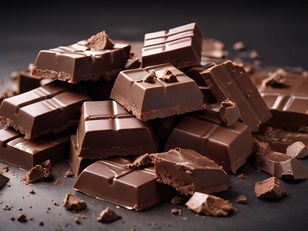
Have you ever tried to put an entire bar of chocolate in your mouth in one go? That (probably😉) won't work. You eat a bar of chocolate in pieces, in chunks. That's exactly how you will offer language to your students: in manageable chunks.
Those pieces of language do not consist of elements of grammar: a chunk of the present tense, a chunk of the indirect object, a chunk of the possessive pronoun, etc. No, with chunks of language, also know as 'target structures', we mean pieces of language that we can use for communication. Examples of target structures are: 'can't sleep', or 'is hungry' or 'had to buy groceries'.
In the world language classroom it's important that we don't immerse our students in too much different language: the brain needs repetition, lots of repetition. So it's very helpful when a teacher decides in advance which 3 target structures will get extra attention in the upcoming lessons, for exaple 'wants to have', 'asks' and 'gives him/her'. Of course you will use more vocabulary that this in your lessons. But by maintaining the focus on these 3 structures you will be less likely to go out of bounds: you don't want your students to receive so much different language at once (like synonyms) so that the actual target structures get lost in the input.
So, immersion in the language, yes, that's our aim. But it needs to be the same input as much as possible, these target structures. Synonyms and antonyms are for a later moment, when this first target structure has been acquired by your students. Only then will their brain have enough space for new vocabulary. Just like your mouth will have enough space for more chocolate when your mouth is empty...