About Comprehensible Input
What can you learn at DLL
Dynamic Language Learning is not a method. Our courses show various active work forms based on Comprehensible Input, a philosophy supported by science, showing that language is being acquired through an immersion of interesting and comprehensible input of that language. Here is a list of some of the most used CI activities.
TPR (Total Physical Response)

TPR is known in the field of education since the 60s. In a nutshell, TPR is an activity in which the teacher gives a commando in the target language and the students perform this command, showing their comprehension. You can offer a lot of variety with these commands (walt to the door, walk slowly to the door, walk like a gorilla to the door, walk to the door after you have closed your book, walk together with your partner to the door, etc). It is an ideal activity to introduce new vocabulary. Furthermore it is a dynamic activity that increases motivation and can be used as a body break.
TPRS (Teaching Proficiency through Reading and Storytelling
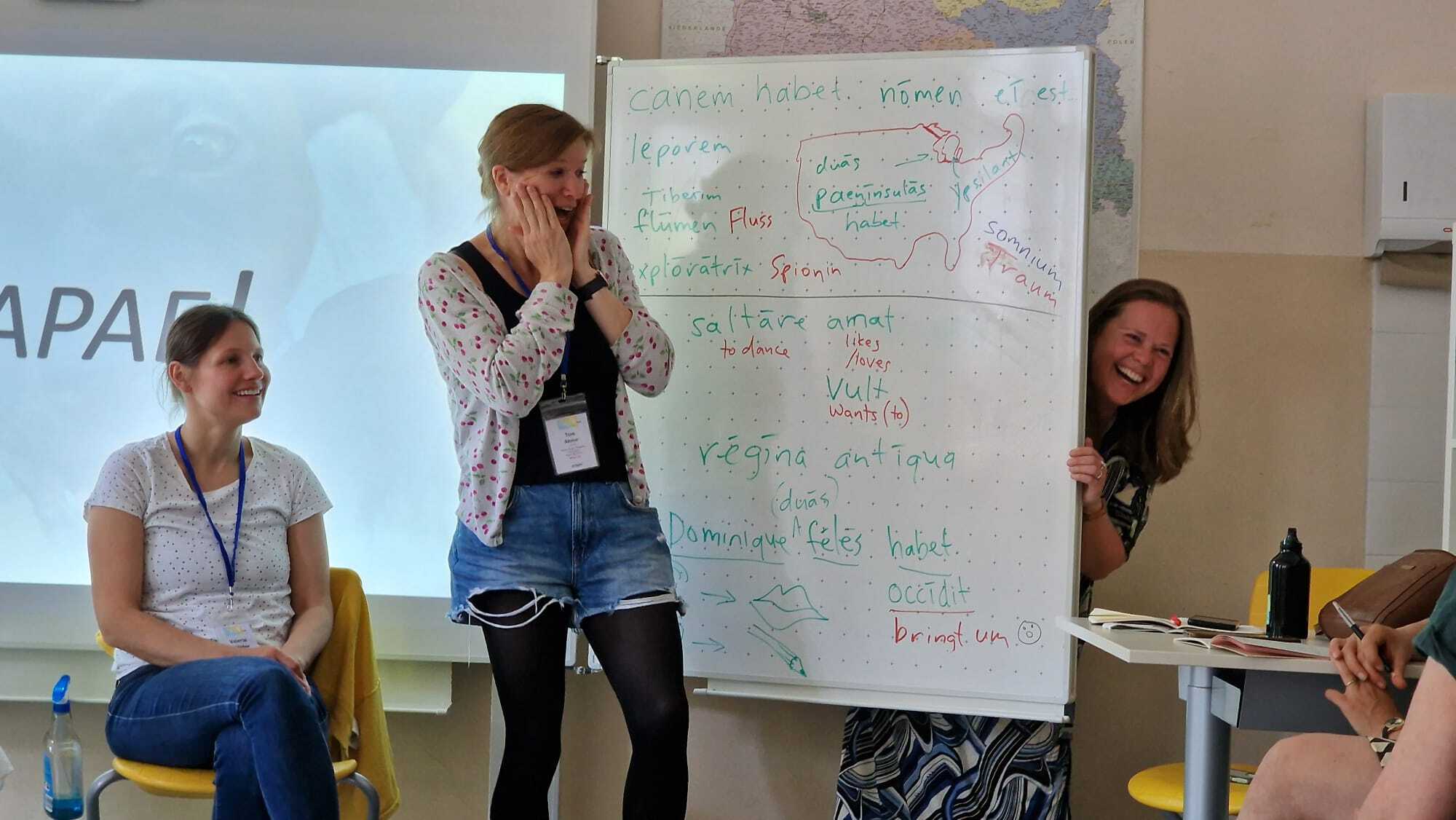
This activity started in the 90s by Blaine Ray and has been developed further by various teachers. TPR was the foundation of TPRS, having series of commands making a story. The power of TPRS is the co-creation of stories with your students, using a framework. Every class can create a different story based on the same framework. Besides creating and performing a story, the story can be put on paper for reading. When reading the story there is focus on comprehension, but it also offers possibilities for brain friendly grammar lessons.
PQA (Personalized Questions and Answers)

Communication is key in language classes and that includes conversations. With PQA you prepare a structured conversation with your students about all sorts of topics, like hobbys, sports, film, music, food. But you can also invite them to share their opinions. These kind of conversations appear spontaneous, but as a teacher you do need a structure, making the target language the communication language. But the best part about PQA is that you get to know your students and they get to know each other. A perfect activity to increase group connection.
Write and Discuss

Once you have created a story or have had an interesting conversation with your class, it's a great idea to put it in writing. With Write and Discuss the teacher asks the students to retrieve the information so that the teacher can write down a structured text. While writing the teacher can ask for additional details and show how a text needs to be structured. It's a wonderful step towards independent reading and a wonderful retrieval activity.
Pop-up grammar

Grammar is a part of language, but often demotivated students to learn the language. That's why we do this in a different way. Whn you are reading a text you can use pop-up grammar: you draw attention to a certain grammar pattern (for example verb endings in the past tense) and every time you come across a word with this ending, this grammar 'pops up'. This makes the grammar patterns visible to your students and will they understand them better.
Picture Talk

At Picture Talk you discuss with your students what you see in an interesting picture or image. But it's not just talking about everything in this picture. At Picture Tak it's all about the action and the emotion in the picture. Furthermore you can spark their imaination by asking your students what they think about this picture. What has happened before? What will happen next? This activity is perfect to communicate in the target language and it motivates students to share their thoughts and opinions.
Calendar Talk

Don't think that the vocabulary for the days of the week is just a list of 7 words. It's about concepts that require more vocabulary, like 'the day after tomorrow', 'three days ago'. It's vocabulary that needs a lot of repetition especially in the first year. Fortunately this does not have to be boring with Calendar Talk. Because every day is a special day: it might be someone's birthday, you can talk about that. Maybe it's a historical day, so you can bring culture into your classroom. Maybe it's a very cold or a very hot day, you can talk about the weather. And what's your favourite day of the week?
Clip Chat

Just as with Picture Talk you can talk about a short video in the target language. What's happening? What emotions do we see? While watching the video you can pause it and ask the students what they think will happen next. If there is an activity that guarantees the attention of your students, it's Clip Chat.
CI in Europe
Not just in The Netherlands can you learn about language education with CI. Besides the DLL conference there are other interesting conferences for world language teachers with CI as a main focus: